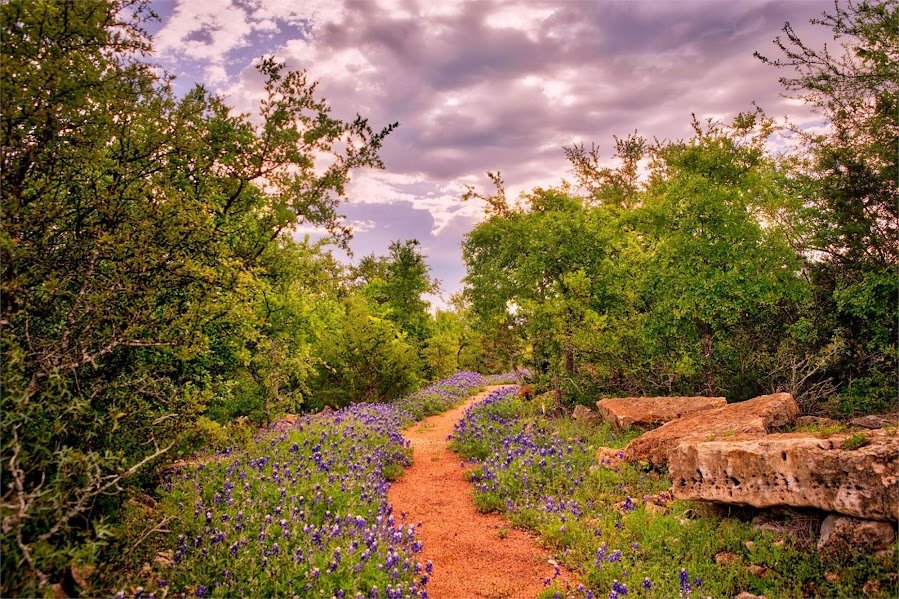
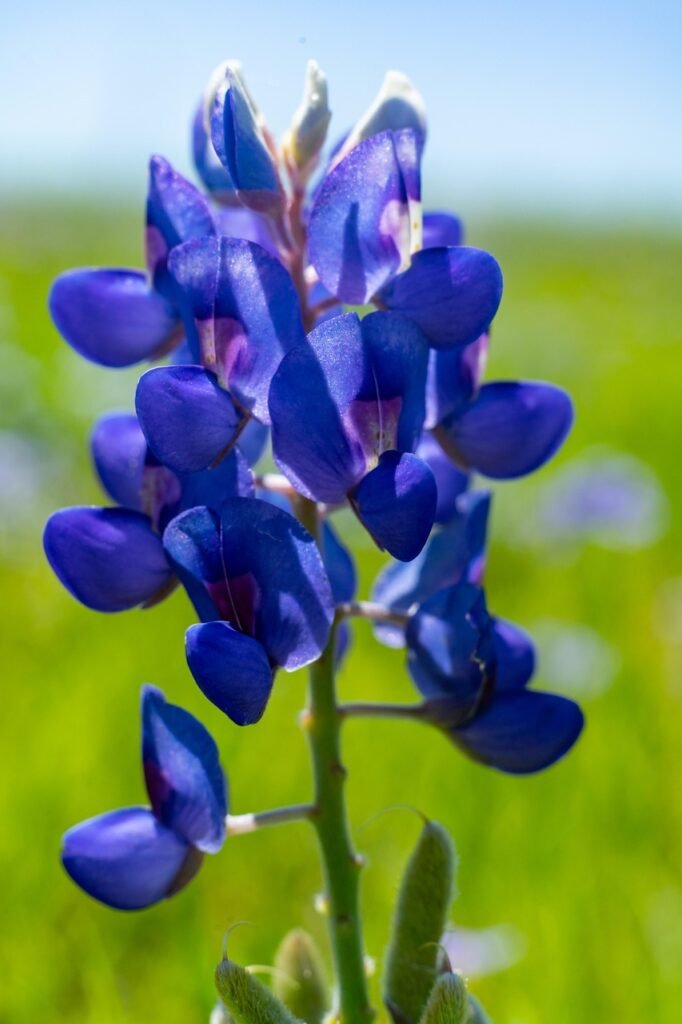
Texas bluebonnets are classified as annual plants, which means that they complete their entire growth cycle from germination to flowering and seed production within one year. These plants begin to sprout in the autumn season, and their growth continues throughout the winter months. Typically, Texas bluebonnets blossom from late March to mid-May. During mid-May, green seedpods appear and gradually change from yellow to brown. At some point between the yellow and brown stages, the seeds within the pod reach full maturity and the pods burst open, scattering the small, hard seeds.
Choose the right time
The best time to plant Blue Bonnet seeds in Texas is October – December. Once established and they are several inches tall they do not need to be protected from the frost. Yes, even those freak once in a life time winter storms!
Plant the seeds
Lightly mist the seeds with water then dust the seeds with the Rhizobium powder provided. Rhizobium which improves plant growth and flowering. This nitrogen is found naturally in most Texas soils. Hand broadcasting is the simplest seeding method and works well. Press seeds firmly into the ground with your hands or walk over the area. Rack soil over the seeds, they need to be covered to promote germination.
Watering and maintenance
Water the seedlings using a mist setting to keep the seeds from moving or floating away. Water once or twice a day as needed to keep the soil moist until the seeds germinate. Then water daily to keep the seedlings from drying out until they are 3 inches tall. Letting seedlings dry out can be the number one cause of failure when starting any plant from seeds. But with a little prep and a little plan, you can have success. A water hose timer and a Soaker hose are a gardener’s best friend. Available on Amazon and at Home Depot and similar stores.
Collecting seeds
Bluebonnets blossom from late March to mid-May. During mid-May, green seedpods appear and gradually change from yellow to brown. At some point between the yellow and brown stages, the seeds within the pod reach full maturity and the pods burst open, scattering the small, hard seeds. Pull the whole plant up before the seedpods burst but after the whole plant dies and starts to dry up. Let the seedpods finish drying on the plant and collect the seeds for next year.
More Tips:
- Bluebonnets like recently disturbed soil, they will grow taller and have more blooms.
- They also like local soil such as decomposed granite soil which promotes drainage.
- We do not recommend fertilizer other than the rhizobium included or fancy soil.
- Many Texas natives can handle some shade. This isn’t one of them.
- Bluebonnets are early bloomers and do their best without being crowded out by other plants.
- Scaring or prepping your seeds can be useful if your seeds got a late start and you will be watering them regularly until they reach 3 inches tall.